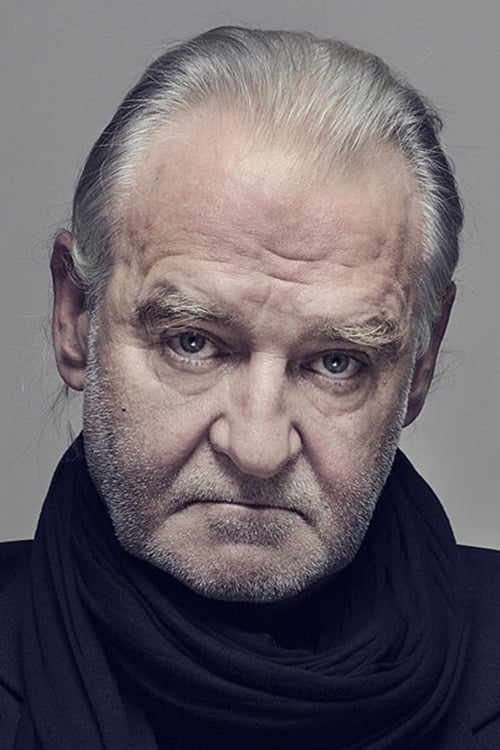
Béla Tarr
Biography
Béla Tarr (July 21, 1955 – January 6, 2026) was a Hungarian filmmaker. Much of his work is marked by philosophical elements and a pessimistic view of humanity. His films utilize unconventional storytelling methods, such as long takes and/or non-professional actors to achieve realism. Debuting with Family Nest in 1979, Tarr underwent a period of what he refers to as "social cinema", aimed at telling mundane stories about ordinary people, often in the style of cinema vérité. Over the next decade, the cinematography of Tarr's films gradually changed; Damnation (1988) was shot with languid camera movement aimed at establishing ambience. It marked Tarr's earliest experimentation with philosophical themes, focused mostly on bleak and desolate representations of reality. Sátántangó (1994) and Werckmeister Harmonies (2000) continued this approach; both are considered by some critics to be among the greatest films ever made. Tarr would later compete in the 2007 Cannes Film Festival with his film The Man From London. Frequent collaborators of Tarr include his wife Ágnes Hranitzky, novelist László Krasznahorkai, film composer Mihály Víg, cinematographer Fred Kelemen, and actress Erika Bók. After the release of his film The Turin Horse (2011), Tarr announced his definitive retirement from film direction. He has been teaching at the Sarajevo Film School since. Tarr died on 6 January 2026 following a long and serious illness. Description above from the Wikipedia article Béla Tarr, licensed under CC-BY-SA, full list of contributors on Wikipedia.
Known For & Full Filmography8 Titles

Movie - 2025, 2h 15m • as Self
This film documents the "FUKUSHIMA with BÉLA TARR", a filmmaking workshop in Fukushima conducted by esteemed Hungarian filmmaker Tarr Béla.

Movie - 2007, 2h 15m • as Self
This exhibition focuses on Jonas Mekas’ 365 Day Project, a succession of films and videos in calendar form. Every day as of January 1st, 2007 and for an entire year, as indicated in the title, a large public (the artist's friends, as well as unknowns) were invited to view a diary of short films of various lengths (from one to twenty minutes) on the Internet. A movie was posted each day, adding to the previously posted pieces, resulting altogether in nearly thirty-eight hours of moving images.

Movie - 2011, 2h 15m • as Béla Tarr
A film within a film within a film within a fish.

Movie - 2008, 2h 15m • as Himself
Hungarian filmmaker Béla Tarr and film critic Howard Feinstein discuss his innovative filmography, punctuated by clips from his films.

Movie - 1984, 2h 15m • Main Cast Role
An enterprising young man who practices medicine, striving to win the affection of his beloved, vows to cure her mother of a serious illness. To truly learn the secrets of medicine, he has to pretend to be deaf and mute and hire himself out as an assistant to the best doctor. Will the hero be able to keep his promise?

Movie - 2015, 2h 15m • as Self
An abandoned tumbledown theater in the outback of Paraíba state is the initial setting of a film about cinema, which explores the testimonials of the novelist and playwright Ariano Suassuna and other filmmakers such as Ruy Guerra, Julio Bressane, Ken Loach, Andrzej Wajda, Karim Ainouz, José Padilha, Hector Babenco, Vilmos Zsigmond, Béla Tarr, Gus Van Sant and Jia Zhangke. They all respond to two basic questions: why do they make movies and why do they serve the seventh art. The filmmakers share their thoughts about time, narrative, rhythm, light, movement, the meaning of tragedy, the audience‘s desires and the boundaries with other forms of art.

Movie - 2014, 2h 15m • as Himself
A documentary about the making of The Turin Horse, the last film directed by Hungarian master Béla Tarr.

Movie - 1987, 2h 15m • as Jesus as Mental Patient
Zoltai is a Hungarian professor who returns home after a visit to the United States. Following a television interview, he commits suicide and leaves a note for his longtime friend Dr. Bardocz. The doctor and Zoltai's colleague Komindi join the police in investigating what drove the man to suicide.