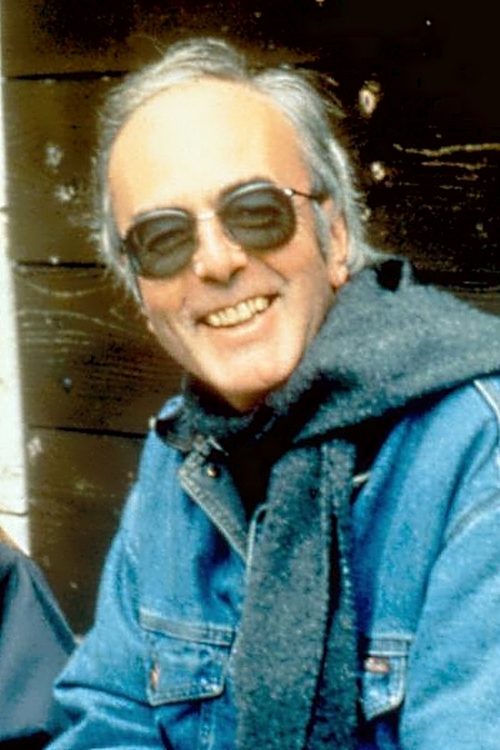
Leslie Megahey
Biography
Leslie Megahey was a British television producer, director and writer. Born in Belfast, Northern Ireland, the son of Thomas Megahey (a minister) and Beatrice (née Walton), Leslie Megahey was educated at King Edward VI School in Lichfield. Early works for the BBC included Canvas: 7: Sunflowers: Van Gogh (1971), and Omnibus File: Thrillers and Crime Fiction (1972). He was the editor of the BBC television documentary series Arena (1977–79; 1982–83); during his time on the series he divided it into Arena Theatre and Arena Art and Design, and Arena became less of a magazine-style programme and more a home for short, distinctive and stylish films about mainly British theatre and visual arts. During this period his programme Henry Moore Meets Leonardo (1978) was broadcast, in which the sculptor Henry Moore discussed Leonardo Da Vinci's anatomical drawings. His two-part Arena special The Orson Welles Story (1982) programmes won a 'Best Documentary' BAFTA in 1983. (Wikipedia)
Known For & Full Filmography3 Titles
Drama Series - 1967, 16 episodes • as Narrator (voice)
Omnibus was an arts-based BBC television documentary series, broadcast mainly on BBC1 in the United Kingdom. The programme was the successor to the long-running arts-based series 'Monitor'. It ran from 1967 until 2003, usually being transmitted on Sunday evenings. During its 35-year history, the programme won 12 Bafta awards. Among the series' best remembered documentaries are Cracked Actor, a profile of David Bowie, and Rene Magritte, a graduate film by David Wheatley, 'Madonna: Behind the American dream', a film produced by Nadia Hagger, and a profile of the British film director Ridley Scott. For a season in 1982, the series was in a magazine format presented by Barry Norman. The series was replaced by 'Imagine' hosted by Alan Yentob.

Movie - 1982, 2h 15m • as Narrator (voice)
Profile of Orson Welles, looking at his life and career in theatre, radio and particularly film.

Movie - 1991, 2h 15m • as Narrator
Documentary looking at Orson Welles and the production of the film CITIZEN KANE fifty years ago, considering the furore that accompanied it and the real life press baron William Randolph Hearst upon whom Kane is based, and his efforts to halt the film, destroy the negative and persecution of people involved with its production and showing. It includes BBC interviews with Welles made in 1960 and 1982, and film historian Robert Carringer looks at the scenes that never made it to the screen. American film critic Pauline Kael also analyses the film's enduring appeal. Extracts from "The RKO Story" (producer: Rosemary Wilton) and "Yesterday's Whitness" (producers: Christopher Cook and Stephen Peet).