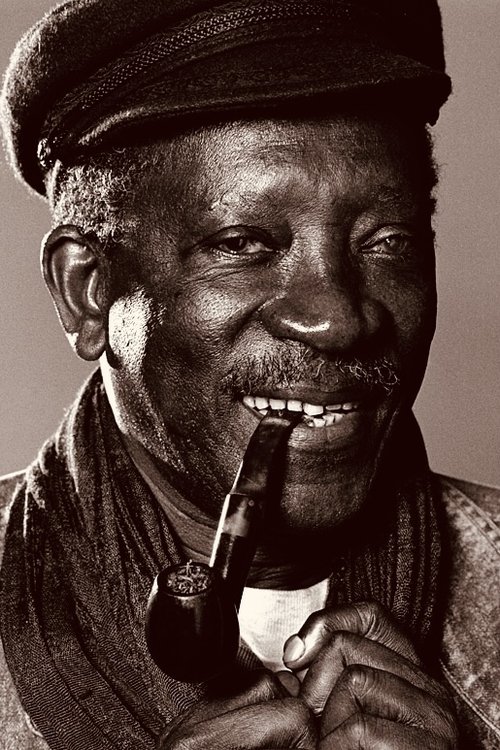
Ousmane Sembène
Biography
Ousmane Sembène (January 1, 1923 — June 9, 2007), often credited in the French style as Sembène Ousmane in articles and reference works, was a Senegalese film director, producer and writer. The Los Angeles Times considered him one of the greatest authors of Africa and he has often been called the "Father of African film."
Known For & Full Filmography9 Titles

Movie - 1968, 2h 15m • as Public Writer at the Post Office (uncredited)
A money order from a relative in Paris throws the life of a Senegalese family man out of order. He deals with corruption, greed, problematic family members, the locals and the changing from his traditional way of living to a more modern one.

Movie - 1966, 2h 15m • as The Teacher (uncredited)
Eager to find a better life abroad, a Senegalese woman becomes a mere governess to a family in southern France, suffering from discrimination and marginalization.

Movie - 1978, 2h 15m • as A Ceddo / Ibrahima (uncredited)
The Ceddo people try to preserve their traditional African culture against the onslaught of Islam, Christianity, and the slave trade. When King Demba War sides with the Muslims, the Ceddo kidnap his daughter, Princess Dior Yacine, to protest their forcible conversion to Islam.

Movie - 2015, 2h 15m • as Himself (archive footage)
Meet Ousmane Sembene, the African freedom fighter who used stories as his weapon.

Movie - 1981, 2h 15m • as Himself
Paulin Vieyra captures Ousmane Sembène, one of the greatest filmmakers of Africa, during the filming of Ceddo. L’Envers du Decor was completed after four years of production. As for Ceddo, it would be censored under the Senghor regime and until 1983 by the Senegalese authorities.

Movie - 2013, 2h 15m • as Self
Meeting of two greats, Cissé's tribute to the dean of African cinema is without discours, without pathos. It is the one returned by his mini camera, which attends the funeral ceremonies that marked the departure of Ousmane Sembene in Dakar, and finds the relatives of Sembene in the house he had built in Yoff, directly on rocks beaten by the ocean. These simple and close images, with a distance from the ceremonial that Sembene would have appreciated, those briefly borrowed from his films and archives, weave a film full of friendship and fraternity.

Movie - 1994, 2h 15m • as Self
Senegalese documentary about the country's most famous film-maker - Ousmane Sembène. The groundbreaking director explains his philosophy, politics and hopes for the future of African cinema.

Movie - 2023, 2h 15m • Main Cast Role
The film uses a collection of post-World War II black & white photographs to portray the dockworkers of Marseilles, many of whom were of African descent. Set in and around a 1947 strike protesting weapons shipments to the French in Indochina, the images evoke the life and work of Senegalese filmmaker, Ousmane Sembène, a former dockworker, and one of the founding figures of the New African Cinema of the 1960s.

Movie - 2014, 2h 15m • as Self
Tahar Cheriaa: Under the Shadow of the Baobab documents the career of one of the core fathers of Pan-Africanism and founder of Africa’s first film festival, the Carthage Film Festival. After Tunisian independence, Cheriaa used all his energy to bring the first authentic images of postcolonial Africa to broader audiences. The film depicts Cheriaa’s ideas and projects, with interviews and archival material creating a complete portrait of the man and his fight for both Sub-Saharan African cinema and African cinema as a whole.