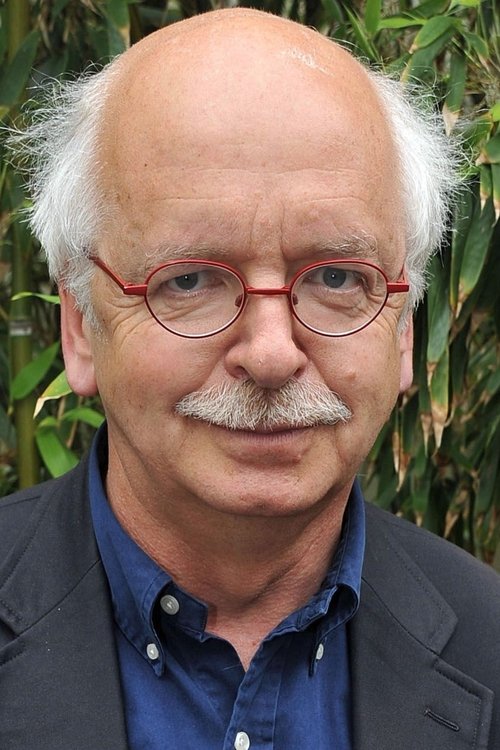
Erik Orsenna
Biography
Érik Orsenna is the pen-name of Érik Arnoult (born 22 March 1947) a French politician and novelist. After studying philosophy and political science at the Institut d'Études Politiques de Paris ("Sciences Po"), Orsenna specialized in economics at the London School of Economics. He was a close collaborator of François Mitterrand and held several government positions in the 1980s and 1990s. He is a member (currently on leave) of the Conseil d'État, having been appointed in 1985. He was elected to the Académie Française on 28 May 1998. He won the 1990 International Nonino Prize in Italy. For Voyage au pays du coton he received the second prize of the Lettre Ulysses Award in 2006. Source: Article "Érik Orsenna" from Wikipedia in English, licensed under CC-BY-SA 3.0.
Known For & Full Filmography8 Titles
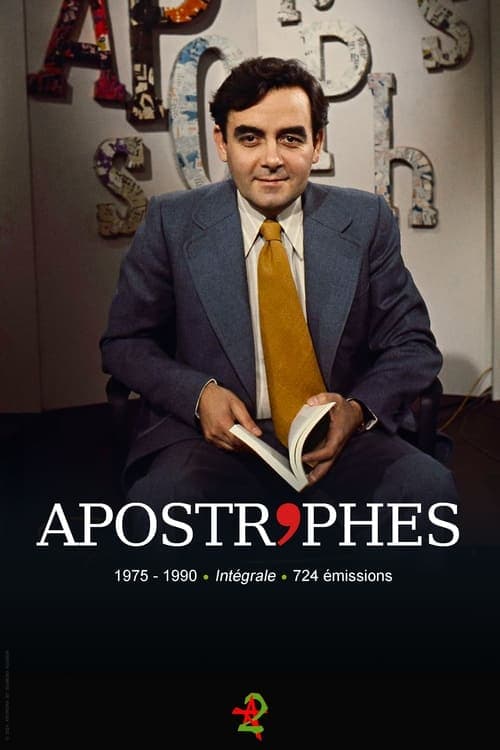
Drama Series - 1975, 16 episodes • as Self
Apostrophes was a live, weekly, literary, prime-time, talk show on French television created and hosted by Bernard Pivot. It ran for fifteen years (724 episodes) from January 10, 1975, to June 22, 1990, and was one of the most watched shows on French television (around 6 million regular viewers). It was broadcast on Friday nights on the channel France 2 (which was called "Antenne 2" from 1975 to 1992). The hourlong show was devoted to books, authors and literature. The format varied between one-on-one interviews with a single author and open discussions between four or five authors.

Drama Series - 1985, 16 episodes • as Self
Télématin is a French breakfast television news show, broadcast on France 2 since January 7, 1985. It is broadcast in Metropolitan France weekdays from 6:30 to 9:00 am CET. TV5 broadcast the show in Canada in its entirety until September 2011: it now shows a 90 minute version between 6:30 and 8:00 am Eastern Time, when the French original version is now 2h30 long. Télématin is hosted by William Leymergie. The show is daily seen by around 40% of the French morning audience, a very high percentage for French TV. In Metropolitan France, the newscasts are presented at 7:00, 7:30 and 8:00, with newsflashes at 6:30 and 8:50, and two press reviews at 7:20 and 8:30. The 6:30, 7:30 and 8:50 newscasts are usually presented by a female reader and the hourly newscasts by a male. The usual readers are Nathanaël de Rinquesen, Sophie Le Saint, Julien Benedetto, Sophie Gastrain, Patrice Romedenne and Frédéric Vion.
Drama Series - 2012, 16 episodes • as Self
An outstanding performance featuring brilliant storytelling, high stakes drama, and unforgettable character arcs.

Drama Series - 1987, 16 episodes • as Self
An outstanding performance featuring brilliant storytelling, high stakes drama, and unforgettable character arcs.

Drama Series - 1975, 16 episodes • as Self
An outstanding performance featuring brilliant storytelling, high stakes drama, and unforgettable character arcs.

Drama Series - 2023, 16 episodes • as Self - Guest
An outstanding performance featuring brilliant storytelling, high stakes drama, and unforgettable character arcs.

Drama Series - 2017, 16 episodes • as Self
By making the Elysée Palace the most coveted, and also one of the most mysterious residences in France, the founder of the Fifth Republic surely never imagined that his successors would discover the immense solitude of power there. De Gaulle, Pompidou, Giscard d’Estaing, Mitterrand, Chirac, Sarkozy, then Hollande: Each of them had the opportunity to experience the dizzying nature of supreme office in this 18th century palace with the appearance of a bunker. It is this intimate, solitary and silent history that is recounted here, through key events, previously unheard accounts, and rare archive footage. The film reveals above all how heads of state are capable of secretly walling themselves up in serenity, gravity, tragedy, or dignity, as they embrace their destiny along with that of France.

Movie - 2011, 2h 15m • as Self
"What could be more unsettling than a man close to death whose profound arrogance drives him relentlessly to hang onto both his power and his writing, to the bitter end?" In the twilight of his second seven-year term, François Mitterrand was alone. Ravaged by illness and abandoned by a large majority of the Socialist Party, who would not forgive him for the disastrous outcome of the March 1993 elections, the Head of State was preparing to tackle a second round of cohabitation with the right wing. However a series of unexpected tragedies and revelations would arise, casting a shadow over the end of his reign…