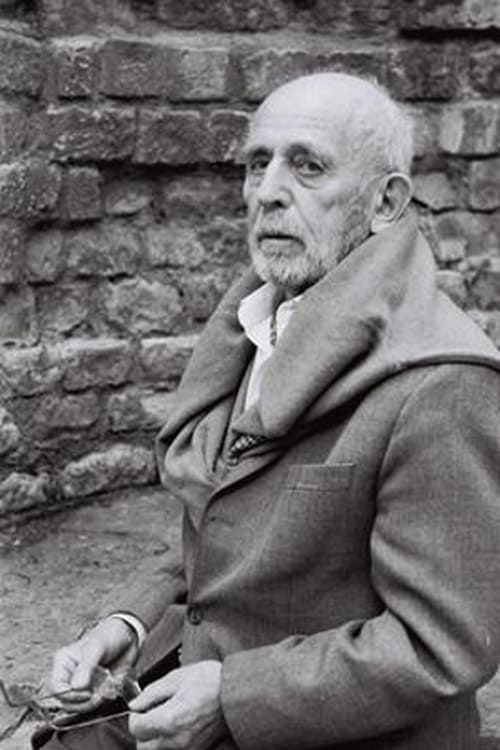
Jacques Baratier
Biography
Jacques Baratier was a French film director and screenwriter. He directed 21 films. His film Goha won the Jury Prize at the 1958 Cannes Film Festival. His 1962 film La poupée was entered for the 12th Berlin International Film Festival. Goha was also shown as part of the Cannes Classics section of the 2013 Cannes Film Festival. Description above from the Wikipedia article Jacques Baratier, licensed under CC-BY-SA, full list of contributors on Wikipedia.
Known For & Full Filmography7 Titles

Movie - 1968, 2h 15m • Main Cast Role
An experimental arrangement of austerely executed but intensely hallucinatory episodes that build into a nightmarish fever of isolation and hopelessness.

Movie - 1996, 2h 15m • Main Cast Role
A young woman gradually locks herself in her fear.

Movie - 2007, 2h 15m • as Little widower
Anna, 50 years old, moves into her new house. Rooms are full of boxes which contain a lot of things and plenty of memories. Anna has lived many lives and her past comes out of these boxes. Her parents surely, but also her children and their fathers, the living and the dead. In this breakneck period of her life, time is running faster and faster and Anna takes a run-up to face the past and try to go towards the future. And, maybe, to manage to still believe in love?

Movie - 2012, 2h 15m • as Self (archive footage)
A documentary film in which Fabrice Aragno assembles a range of footage from the archives of Radio Télévision Suisse, the Cinémathèque suisse and Cinéma en tête by Freddy Buache’s partner Marie-Magdeleine Brumagne.

Movie - 1976, 2h 15m • as Le sociologue
A fake documentary on the life forms of the Paris Suburbs, viewed through the eyes of homeless, unemployed people the sharks of politics and building societies push to hopeless life.

Movie - 2003, 2h 15m • Main Cast Role
directed by Jackie Reynal, from 2003 Autour de Jacques Baratier, directed in 2002 by Jackie Raynal, is a 24-minute documentary portrait that offers a sensitive look at the man and the filmmaker. It stands as a valuable complement to other films about him, helping us understand Baratier’s playful, poetic, and rebellious approach to cinema.

Movie - 2007, 2h 15m • as Self
30 years after their artistic revolution, members of the Zanzibar group meet in 1999 in Saint-Sulpice Square in Paris (France) in front of Gérard Courant's camera.