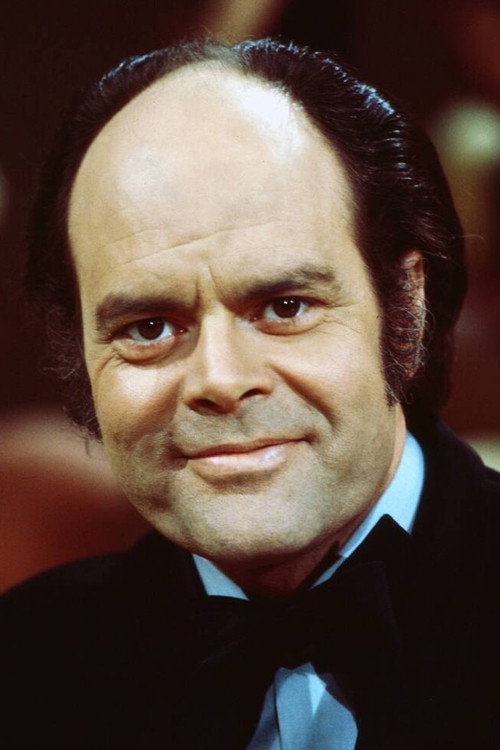
Donald Grobe
Biography
Donald Roth Grobe (16 December 1929 – 1 April 1986) was an American lyric tenor who sang at the Deutsche Oper Berlin during the 1960s, 1970s and 1980s. He made his début in Chicago, in 1952, as Borsa in Rigoletto. He sang at his first Salzburg Festival in 1962. He joined the Deutsche Oper in 1960, and sang there until his death, as well as in other important opera houses, mostly in Europe but also at the Metropolitan Opera where he sang Froh in four performances of Das Rheingold during the 1968/69 season. He created the role of Wilhelm in Der junge Lord in the opera's world premiere as well as singing Aschenbach in the German premiere of Death in Venice and Luzio in the US premiere of Wagner's early opera, Das Liebesverbot. He is on record as Froh in Herbert von Karajan's studio recording of Das Rheingold and on video as Don Ottavio in Ferenc Fricsay's German-translation performance of Don Giovanni from the Deutsche Oper, 1961, and as Jaquino in the opera-film Fidelio (1970) made with the forces of the Deutsche Oper, with the music recorded in 1969 by the Deutsche Oper orchestra with Karl Böhm.
Known For & Full Filmography6 Titles

Movie - 1970, 2h 15m • as Jaquino
Beethoven's opera Fidelio, conducted by Karl Böhm, featuring Gwyneth Jones as Leonore and James King as Florestan

Movie - 1968, 2h 15m • as Wilhelm
A 1968 production of Hans-Werner Henze's comic opera filmed at Berlin's Deutsche Oper. With the plot centering around how a whole town is deceived into taking a dressed monkey as a young lord, the work features performances from, among others, Edith Mathis, Donald Grobe and Barry McDaniel. Christoph von Dohnányi conducts.

Movie - 1961, 2h 15m • as Don Ottavio
Of the five premieres produced during a four-month period, Mozart's "Don Giovanni" on the first night attracted an illustrious audience. In addition to the President of the Federal Republic of Germany and a selection of diplomats and politicians, high-ranking guests included theatrical directors from West Germany and other Western European countries, composers, conductors, actors, writers, painters and sculptors, not to mention rectors and lecturers from Berlin's universities and the world's leading music critics. [...] The success was commensurate with the significance of the occasion. All involved in the performance received countless ovations in front of the magnificent yellow curtain. The new building - and the new stage with its state-of-the-art technology - had shown itself to be more than capable of handling Mozart's most demanding work.

Movie - 1967, 2h 15m • as Paolino
Staged by Sellner, conducted by Maazel with costumes by Sanjust and performed by the six soloists with consummate vocal elegance, Cimarosa's "Secret Marriage" offers unadulterated pleasure and triggers a kind of ecstasy with its combination of delicacy and opulence as well as its sophisticated humor. It brings Cimarosa's musical mastery to the fore - but also the visual impact of the opera. The stage is no longer a place of intellectual barrenness, but once again a playground, a sparkling showcase of wit and intellect.

Movie - 1970, 2h 15m • as Belmonte (archive footage)
An outstanding performance featuring brilliant storytelling, high stakes drama, and unforgettable character arcs.

Movie - 2012, 2h 15m • as Victorin
In 1920s Germany, Erich Korngold's work was considered “degenerate” and banned. Eventually, in 1934, he left for Hollywood. There, he made a name for himself as a film composer and only rarely wrote great works for the stage. Many of his quite successful operas, composed between 1913 and 1927, stopped being performed after World War II. Among these was his perhaps most significant work, Die tote Stadt (“The Dead City”), which was performed again for the first time after a long hiatus in 1955 in Munich. Further productions followed. Nevertheless, Götz Friedrich's version of 1983 for the Deutsche Oper Berlin was only the fifth new production of the opera after 1945.