Camila Mota
Known For & Full Filmography7 Titles

Drama Series - 2025, 16 episodes • as Self - Presenter
Award-winning investigations - revealing secrets, rooting out injustice, and exposing crime, corruption, and abuse. The biggest stories from BBC correspondents all over the world.

Movie - 2019, 2h 15m • Main Cast Role
Isa, a young artist invited to propose a project for an exhibition, sets out to stage a dramatic adaptation of ‘The Posthumous Memoirs of Bras Cubas’, a satirical 19th-century novel by Machado de Assis. The rehearsal is marred by difficulties which the viewer must interpret as being due to the fact that Isa is a woman, young, black, all of the above, or as difficulties anyone would encounter.

Movie - 2002, 2h 15m • Main Cast Role
From 2000 to 2007, Teat(r)o Oficina Uzyna Uzona worked on the staging of Euclides da Cunha's epic book, Os Sertões, which describes the 19th Century War of Canudos in the Brazilian "sertão"(backlands). The result was the pentalogy of plays: A Terra (2002), O Homem I (2003), O Homem II (2003), A Luta I (2005), and A Luta II (2006). This first play is a carnival opera, the actors are the earth, the vegetation, the wind, the animals, the rivers, the drought. It reveals the most intimate secrets of nature, that also vibrate in the human and trans-human arteries. This work enriched by the experience that the subsequent works brought gains an updated insight into the human interference in the environment. Destructive power is proportional to financial power, and the discussion about the way space gets occupied was brought to the forefront, including the real-estate boom that surrounds today not only Teatro Oficina, but the whole world, now hotter and more arid.

Movie - 2017, 2h 15m • as Self
An outstanding performance featuring brilliant storytelling, high stakes drama, and unforgettable character arcs.

Movie - 2007, 2h 15m • as Cabrita
A marginal version of Brecht’s piece, “Baal”.
Movie - 2021, 2h 15m • as Self
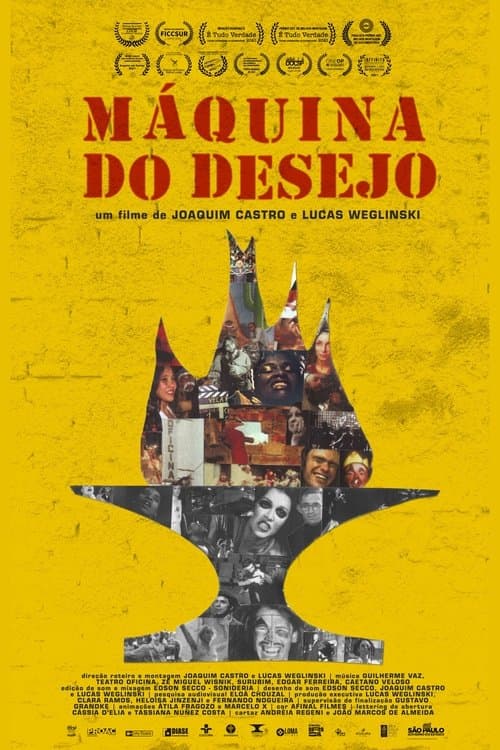
In six decades, Teatro Oficina has done more than revolutionize theatrical language in the country: the aesthetic influence of José Celso Martinez Corrêa's company extends from Tropicalism to the renewal of Brazilian audiovisual languages from the 1960s onwards. The film revisits a story that it involves personalities such as Caetano Veloso, Glauber Rocha, Lina Bo Bardi, Chico Buarque and Zé do Caixão, brings together scenic art, ecology, architecture and sexuality, and mixes art and life in the search for a Brazilian based language.

Movie - 1999, 2h 15m • as Celeste
Boca de Ouro was born in a back room of a dance hall, and his first crib was a bathroom sink where his mother left him. The boy grows up and becomes a feared and respected bookie—an almost mythological figure in the community where he lives. Fascinated by the story of the recently deceased criminal, journalist Caveirinha seeks out the criminal's ex-lover, D. Guigui, to gather material for an article. Her accounts of Boca reflect her emotional state.