Toshimasa Inoue
Known For & Full Filmography7 Titles

Movie - 1942, 2h 15m • as Conductor
An outstanding performance featuring brilliant storytelling, high stakes drama, and unforgettable character arcs.

Movie - 1938, 2h 15m • as Private Masaki
During the Second Sino-Japanese War, a five-man reconnaissance unit is dispatched to scout enemy positions in a volatile territory. After a sudden and intense firefight, the group is separated, leaving the survivors to wait in agonizing suspense at their outpost.

Movie - 1942, 2h 15m • Main Cast Role
An outstanding performance featuring brilliant storytelling, high stakes drama, and unforgettable character arcs.
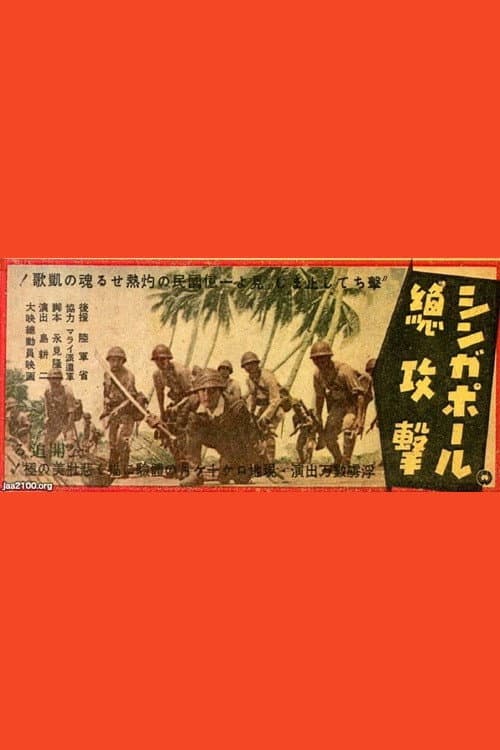
Movie - 1943, 2h 15m • as Sergeant Terai
This film, which was recommended by the Ministry of Education, is based on the Malaya Campaign and the Battle of Singapore and was produced to boost morale. It depicts the Japanese Army’s advance from the perspectives of the artillery units and the “Silver Wheel” units (bicycle units).

Movie - 1938, 2h 15m • as Tailor Gin
Tomotaka Tasaka's A Pebble by the Wayside (Robo no Ishi), made in 1938 and taken from a Yuzo Yamamoto novel, takes place around 1902, was about a young boy brought up entirely by his mother since his drunken father is never home. An intelligent teacher wants to send him to middle school, but instead the father apprentices him to a clothing store to which he is in debt. The mother dies and the boy is forced to quit work when his father insults the store owner. Later the boy goes to Tokyo, but only to continue his hardships. First he is forced to do a maid's job at a boarding house and later is used by an old woman to steal at funerals. Finally he is rescued by the teacher, whom he meets in Tokyo.

Movie - 1943, 2h 15m • Main Cast Role
A band of guerrillas fight against occupying British forces in Malaya.

Movie - 1939, 2h 15m • Main Cast Role
"Around the time he made such remarkably ambivalent war films as Mud and Soldiers and Five Scouts, Tasaka directed this 'home front' comedy-drama which is too bizarre to be serious propaganda. [The plot revolves around a public contribution campaign to buy airplanes.] The mayor's aviator son promises to fly over the village in salute, and much of the narrative concerns the preparations for this great event. Tasaka throws in a few songs, some village humor and satire, and tremendous camera mobility, finally wringing every possible effect from his climax." John Gillett, British Film Institute