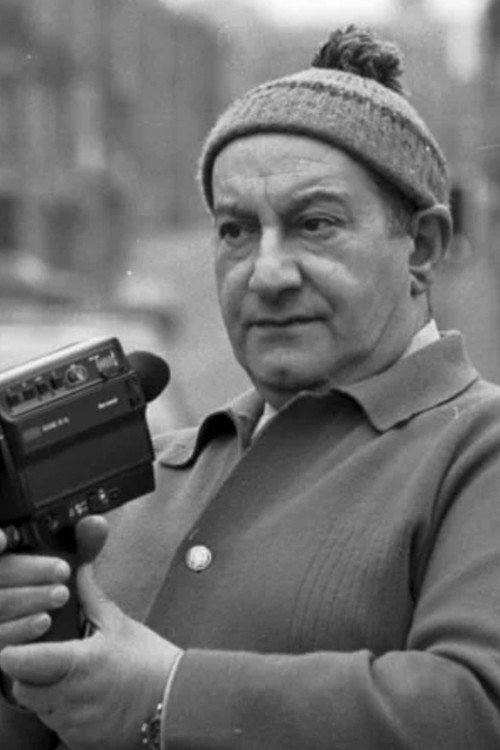
Enrico Cocozza
Biography
Enrico Cocozza was a Scottish-Italian filmmaker whose imaginative and often surreal films earned considerable recognition on the amateur film circuit during the 1940s and 1950s. Working mainly in and around Wishaw, where his family owned the popular Belhaven Café, he produced films including Chick’s Day (1950), a prize-winner at the 1951 Scottish Amateur Film Festival, The Living Ghost (1957) and Glasgow’s Docklands (1959). A combination of personal and health difficulties eventually drew Cocozza away from filmmaking. These included an eye injury, the onset of diabetes, his mother’s declining health and death, and the sale of the family café. He later spent much of his working life teaching at the University of Strathclyde in Glasgow, but was forced to retire when complications from diabetes caused his eyesight to deteriorate. Despite his earlier success, his films gradually fell into obscurity.
Known For & Full Filmography6 Titles

Movie - 2001, 2h 15m • as Self (Archive)
A documentary exploring the life and work of experimental Scots-Italian filmmaker Enrico Cocozza through excerpts from his films and interviews with those who knew him. Cocozza gained recognition on the amateur film circuit during the 1940s and 1950s, but his work was largely forgotten in later years. In old age, he became deeply anxious that The Golden Fry—the chip shop beneath his flat, in premises that had once housed his family’s café—might catch fire and destroy the films he kept in storage. This fear ultimately led to his collection being deposited in what is now the National Library of Scotland’s Moving Image Archive, allowing his remarkable body of work to be preserved and rediscovered. Created with limited resources but extraordinary visual ambition, Cocozza’s films were, in the best sense, “cheaply extravagant.”

Movie - 1948, 2h 15m • as The Evil One
A fictional story of a Dracula-type character who terrorises the Coltness Estate in Wishaw.

Movie - 1959, 2h 15m • Main Cast Role
A devilish, surreal nightmare of bisexual lust.

Movie - 1951, 2h 15m • as Scientist
A grim scientist orders his third robot to destroy the male of two humanoid creations after they unexpectedly fall in love. But his plan backfires when the female robot seduces her creator into drinking from a poisoned cup before making her escape. Robot Three received both the Victor Saville Trophy for Most Outstanding Film and the Alfred Hitchcock Cup for Best Fiction Film at the 1952 Scottish Amateur Film Festival, cementing its place as one of the era's most celebrated Scottish amateur productions.

Movie - 1956, 2h 15m • as Café Worker
Incubo (Nightmare) is a haunting, surrealist portrait of alienation set against the industrial landscapes of 1950s Glasgow. Following a lonely café worker drifting through parks, streets and wastelands in the grip of depression and emotional exhaustion, the film blurs the line between reality and dream. Encounters with strangers offer only fleeting moments of connection as his journey moves inexorably toward tragedy, accompanied by meditative Buddhist chants that lend the film an almost hypnotic, existential quality. One of Enrico Cocozza's earliest surviving works, Incubo transforms the city into a bleak psychological landscape where despair and isolation become inescapable.

Movie - 1978, 2h 15m • as Self
The course of a day in the life of the 'fit o' the toon' area in Wishaw through the eyes of Enrico Cocozza. His first film after a break of 18 years, it contains interviews by Cocozza and vox pops from a variety of local people about their lives, jobs, plans for the day, health, holidays, weather etc as we chronologically move through the day. Varied musical accompaniment to different scenes adds a slight comedic element.