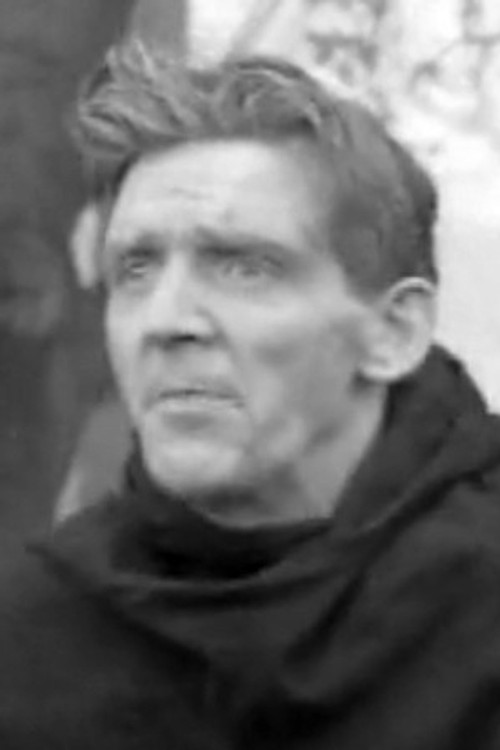
Paddy Joyce
Biography
Born Patrizio Schaurek in Trieste, Italy to a Czech father, Frantisek Schaurek, and an Irish mother Eileen (sister of James) Joyce, Paddy Joyce was an Irish actor of British stage, film and television. Returning to Dublin at the age of five following his father's death, Joyce studied at Belvedere College, the alma mater of his famous uncle. After school, Paddy turned his attention to singing. Initially, he formed a close harmony quartet with three other gentlemen named Four Dots and a Dash, subsequently renamed The Four Ramblers. In 1949, he was part of a trio with two ladies named The Humoresques, which toured Canada with the popular English comedian and actor George Formby. Turning to actor, Joyce took his mother's maiden name because Schaurek limited him to Eastern European roles. He made his cinematic debut in The Cruel Sea and performed in Lionel Bart and Joan Littlewood's Fings Ain’t Wot They Used T’be in the early 60s, before later working regularly with Ken Loach, appearing in The Big Flame, written by Jim Allen, and Poor Cow. He also starred in Allen's play The Lump. Joyce was a regular in two of the UK's biggest soaps. Between 1968 and 1974, he had a recurring role as the rag and bone man Tommy Deakin in Coronation Street, and between 1990 and 1993 he played John Royle, the father of Queen Vic owner Eddie Royle (Michael Melia) in EastEnders. Joyce lived in Muswell Hill, London, with his Canadian wife, Dorothy, and two children. He died of a stroke in London in the year 2000, aged 77.
Known For & Full Filmography62 Titles
Drama Series - 1985, 16 episodes • as John Royle
The everyday lives of working-class residents of Albert Square, a traditional Victorian square of terrace houses surrounding a park in the East End of London's Walford borough.
Drama Series - 1985, 16 episodes • as John
The everyday lives of working-class residents of Albert Square, a traditional Victorian square of terrace houses surrounding a park in the East End of London's Walford borough.
Drama Series - 1979, 16 episodes • as Pat
Roguish comedy drama following the misadventures of small-time crook Arthur Daley.

Drama Series - 1972, 16 episodes • as Bill Narraway
Crown Court is an afternoon television courtroom drama produced by Granada Television for the ITV network that ran from 1972, when the Crown Court system replaced Assize courts and Quarter sessions in the legal system of England and Wales, to 1984.
Drama Series - 1993, 16 episodes • as Mr. Austen
Peak Practice is a British drama series about a GP surgery in Cardale — a small fictional town in the Derbyshire Peak District — and the doctors who worked there. It ran on ITV from 10 May 1993 to 30 January 2002 and was one of their most successful series at the time. It originally starred Kevin Whately as Dr Jack Kerruish, Amanda Burton as Dr Beth Glover and Simon Shepherd as Dr Will Preston, though the roster of doctors would change many times over the course of the series. Cardale was based on the Staffordshire village of Longnor for the final series, but was previously based in the Derbyshire village of Crich, although certain scenes were filmed at other nearby Derbyshire towns and villages, most notably Matlock, Belper and Ashover.

Drama Series - 1964, 16 episodes • as Rooney
An anthology series of television plays which aired on BBC1 from October 1964 to May 1970. The plays were usually written for television, although adaptations from other sources also featured.

Drama Series - 1965, 16 episodes • as Bishonkov
A BBC television anthology series featuring productions of classic and contemporary stage plays usually broadcast on BBC1. Each production featured a different work, often using prominent British stage actors in the leading roles. The series was transmitted from October 1965 to September 1983.

Drama Series - 1955, 16 episodes • as Peasant
The legendary character Robin Hood and his band of merry men in Sherwood Forest and the surrounding vicinity. While some episodes dramatised the traditional Robin Hood tales, most episodes were original dramas created by the show's writers and producers.

Drama Series - 1986, 16 episodes • as Miles
The adventures of the eponymous Lovejoy, a likeable but roguish antiques dealer based in East Anglia. Within the trade, he has a reputation as a “divvie”, a person with an almost supernatural powers for recognising exceptional items as well as distinguishing genuine antique from clever fakes or forgeries.
Drama Series - 1995, 16 episodes • as Shouting Priest
A crazy comedy about three rather strange parish priests exiled to Craggy Island, a remote island off the Irish west coast.
Drama Series - 1974, 16 episodes • as Lazarian
Churchill's People is a British anthology series based on A History of the English-Speaking Peoples, Winston Churchill's four-volume history of Britain and its former colonies. 26 episodes were produced by the BBC and initially broadcast from 30 December 1974 to 23 June 1975.

Drama Series - 1968, 16 episodes • as Davis
The Expert is a British television series produced by the BBC between 1968 and 1976. The series starred Marius Goring as Dr. John Hardy, a pathologist working for the Home Office and was essentially a police procedural drama, with Hardy bringing his forensic knowledge to solve various cases. The Expert was created and produced by Gerard Glaister. The series was also one of the first BBC dramas to be made in colour, and throughout its four series had numerous high quality guest appearances by actors such as John Carson, Peter Copley, Rachel Kempson, Peter Vaughan, Clive Swift, Geoffrey Palmer, Peter Barkworth, Jean Marsh, Ray Brooks, George Sewell, Anthony Valentine, Bernard Lee, Lee Montague, Geoffrey Bayldon, Mike Pratt, Edward Fox, André Morell, Brian Blessed, Nigel Stock, Philip Madoc and Warren Clarke.
Drama Series - 1978, 16 episodes • as Shill
Follow the swashbuckling exploits of Simon Templar, a modern-day Robin Hood of sorts.

Drama Series - 1990, 16 episodes • as Organ Grinder
You Rang, M'Lord? is a British comedy series written by Jimmy Perry and David Croft, the creators of Dad's Army, It Ain't Half Hot Mum and Hi-de-Hi! It was broadcast between 1990 and 1993 on the BBC. The show was a comedy set in the house of an aristocratic family in the 1920s, contrasting the upper-class family and their servants in a house in London, along the same lines as the popular drama Upstairs, Downstairs. The series featured many actors who had also appeared in their earlier series, notably Paul Shane, Jeffrey Holland and Su Pollard, all of whom had previously been in Perry and Croft's holiday camp sitcom, Hi-de-Hi!. Also featured were Donald Hewlett and Michael Knowles from Perry and Croft's It Ain't Half Hot Mum, and Bill Pertwee and occasionally Frank Williams from Dad's Army. The memorable 1920s-style theme tune was sung by Bob Monkhouse.

Drama Series - 1979, 16 episodes • as Arthur
Middle-aged Terry and June Medford are beginning to find the trials of life more difficult as they try to succeed in their daily lives. The couple have just moved to Purley, south-east London... Aunt Lucy and the mynah bird have disappeared, as had the occasionally visiting daughters. Terry and June now mixed with friendly next door neighbour Beattie; Terry's chatty work colleague, Malcolm; and their gruff boss Sir Dennis Hodge. Otherwise, things were much as before, with Terry's pigheaded childishness causing no end of problems, usually thwarting June's attempts at leading a cosy life.

Drama Series - 1978, 16 episodes • as Tramp
Pennies From Heaven is a 1978 BBC television drama serial written by Dennis Potter. The title is taken from a song of the same name written by Johnny Burke and Arthur Johnston. It was one of several Potter serials to mix the reality of the drama with a dark fantasy content, and the earliest of his works where the characters burst into miming to popular 1930s songs. During the Great Depression, a sheet music salesman seeks to escape his dreary life through popular music and a love affair with an innocent schoolteacher.

Drama Series - 1989, 16 episodes • as Stage Doorman
Campion is a television show made by the BBC, adapting the Albert Campion mystery novels written by Margery Allingham. Two series were made, in 1989 and 1990, starring Peter Davison as Campion, Brian Glover as his manservant Magersfontein Lugg and Andrew Burt as his policeman friend Stanislaus Oates. A total of eight novels were adapted, four in each series, each of which was originally broadcast as two separate hour-long episodes. Peter Davison sang the title music for the first series himself; in the second series, it was replaced with an instrumental version.

Drama Series - 1968, 16 episodes • as Mahon
A hapless but caring teacher tries to control his class of unruly kids. The teacher sees much good and potential in his pupils, much to the dismay of his fellow teachers who have lost hope in these kids.

Drama Series - 1975, 16 episodes • as Mike
Two's Company is a British television situation comedy series that ran from 1975-79. Produced by London Weekend Television for the ITV Network, the programme starred Elaine Stritch and Donald Sinden.

Drama Series - 1965, 16 episodes • as Crazy
London itself takes the starring role in this series of plays from the BBC – a role which varies between hero and villain, enchantress and harpy. The series features extensive location filming, ranging from Soho to the Law Courts, Wembley to the docks. Of the twelve episodes, eleven are believed to be lost.

Movie - 1989, 2h 15m • as Prisoner
Erik the Viking gathers warriors from his village and sets out on a dangerous journey to Valhalla, to ask the gods to end the Age of Ragnorok and allow his people to see sunlight again. A Pythonesque satire of Viking life.

Movie - 1999, 2h 15m • as Bill The Gardener
Alice follows a white rabbit down a rabbit-hole into a whimsical Wonderland, where she meets characters like the delightful Cheshire Cat, the clumsy White Knight, a rude caterpillar, and the hot-tempered Queen of Hearts and can grow ten feet tall or shrink to three inches. But will she ever be able to return home?

Drama Series - 1995, 16 episodes • as Spivey
British anthology series of ghost stories.

Drama Series - 1987, 16 episodes • as First Reporter
The everyday traumas and emotional upheavals of the legendary teenage diarist as he struggles to come to terms with life in Margaret Thatcher's 1980s England.

Movie - 1980, 2h 15m • as Irish Priest (uncredited)
The Titanic disaster as seen through the eyes of one couple in each of the three classes on board.

Movie - 1953, 2h 15m • as Sonar Operator (uncredited)
At the start of World War II, Cmdr. Ericson is assigned to convoy escort HMS Compass Rose with inexperienced officers and men just out of training. The winter seas make life miserable enough, but the men must also harden themselves to rescuing survivors of U-Boat attacks, while seldom able to strike back. Traumatic events afloat and ashore create a warm bond between the skipper and his first officer.

Drama Series - 1981, 16 episodes • as Palug
Three children stumble upon imprisoned sorcerer Rothgo and are drawn into a mysterious search through time for the magical Nidus, which has been stolen by the evil witch Belor.

Drama Series - 1973, 16 episodes • as 1st Helper (uncredited)
Victor Frankenstein witnesses his creation turn uncontrollable after he's duped by his associate, Dr. Polidori.

Drama Series - 1975, 16 episodes • as Trotter
Earnest new recruit PC Penrose has left his hometown and joined the force in the Yorkshire town of Slagcaster. He's young and naive but seasoned officer Sergeant Flagg takes him under his wing and shows him the ropes, though his methods can be a little unconventional.

Movie - 1969, 2h 15m • as Irish Soldier
The working-class Smiths change their initially sunny views on World War I after the five boys of the family witness the harsh reality of trench warfare.

Drama Series - 1991, 16 episodes • as Quinn
Gone to the Dogs is a comedy-drama miniseries produced by Central Films for Central Independent Television, and broadcast by ITV between 29 November and 27 December 1991. The six-episode series revolves around the relationship of Jim Morley and Lauren Patterson in the world of greyhound racing.

Movie - 1967, 2h 15m • as Photo Studio Guvnor
A young woman lives a life filled with bad choices. At a young age she marries and has a child--with an abusive thief who quickly ends up in prison. Left alone, she takes up with the guy's mate, another thief, who seems to give her some happiness but who also ends up locked up. She then takes up with a series of seedy types who offer nothing but momentary pleasure--if that.

Movie - 1982, 2h 15m • as Feeney: The Workers
Britannia Hospital, an esteemed English institution, is marking its gala anniversary with a visit by the Queen Mother herself. But when investigative reporter Mick Travis arrives to cover the celebration, he finds the hospital under siege by striking workers, ruthless unions, violent demonstrators, racist aristocrats, an African cannibal dictator, and sinister human experiments.

Drama Series - 1956, 16 episodes • as Hercules
Armchair Theatre is a British television drama anthology series of single plays that ran on the ITV network from 1956 to 1974. It was originally produced by Associated British Corporation, and later by Thames Television from mid-1968.

Drama Series - 1971, 16 episodes • as Ferret
The View from Daniel Pike is a 1971–73 Scottish TV drama series created and written by Edward Boyd, and starring Roddy McMillan as Daniel Pike, a hard-boiled private detective based in Glasgow. A few of the stories were later adapted into book form.

Drama Series - 1975, 16 episodes • as Paddy
Comedy series set in Liverpool about an half-protestant/half-catholic family.

Movie - 1987, 2h 15m • as Drunk in Pub
A penniless middle-aged spinster scrapes by giving piano lessons in the Dublin of the 1950s. She makes a sad last bid for love with a fellow resident of her rundown boarding house, who imagines she has the money to bankroll the business he hopes to open.

Movie - 1959, 2h 15m • Main Cast Role
Directed by cult British director John Krish, the film was sponsored by the Army Kinematograph Corporation. This tightly plotted drama shows British POWs enduring brainwashing and torture during the Korean War, thereby revealing what a soldier could expect if he was ever captured by enemy forces.

Movie - 1983, 2h 15m • as Akhmet
British comedy satirising Stalin's inner circle as an absolute monarchs court. In the face of rampant abuse of power and poisonous distrust some still manage to keep faith with the Bolshevist creed until the very end. In front of the firing squad a stalwart bolshevist of the first hour exclaims: "Even in the best democracy errors are being made!"

Movie - 1984, 2h 15m • as Carpet Layer
Comedy featuring interweaving stories of seven households caught up in a property chain on moving day, each one dependent on the other.

Movie - 1972, 2h 15m • as Irish housekeeper
Lady Caroline Lamb, dissatisfied in her marriage, has an affair with the dashing Romantic poet Lord Byron.

Movie - 1976, 2h 15m • as Man in Aeroplane (uncredited)
A female film crew journeys to Africa where a giant ape, Queen Kong, falls in love with the crew's male star.

Movie - 1959, 2h 15m • as Stagehand
A madman is on the loose... killing fashion models that appear on the cover of magazines. The police start a manhunt in an attempt to capture the killer.

Movie - 1959, 2h 15m • as Banks
The Cat Gang is a group of precocious British kids. They have a habit of hanging around a grown-up customs official who wishes that they'd beat it. But the Gang comes in handy when a smuggling gang arrives on the scene.

Movie - 1955, 2h 15m • as Bill
Story of how a young Irish boy loses the donkey he has reared from birth.
Movie - 1963, 2h 15m • as Barman
Charlie returns to the East End after two years at sea to find his house demolished and wife Maggie gone. Everyone else knows she is now shacked up with married bus driver Bert and a toddler, and they all watch with more than a little interest at the trail of mayhem Charlie leaves as he goes about sorting things out.

Movie - 1992, 2h 15m • as Kelly
The Grass Arena is based on the autobiography of John Healy. Raised in an strongly religious family, with an abusive father, John soon learns that he has to defend himself. Growing into adulthood he takes up boxing, but soon falls victim to alcoholism. His boxing career over, John takes to the Grass Arena (the park) where he lives with other alcoholics. Prison time introduces him to a new and unexpected path.

Movie - 1956, 2h 15m • as Barrow Boy
Peter and his friends find unexpected and exciting adventures when all their wishes are granted by a magic marble.

Movie - 1958, 2h 15m • as Cpl. Ames R.A.
Tunis, 1943. Battle-weary troops of Company C have orders to occupy a derelict Tunisian farmhouse. They are to establish an artillery observation post, reporting on enemy movements before the imminent offensive to liberate Tunis. However German infantrymen discover their operations. The ensuing battle for control of this small piece of land will decide who controls Tunis but more critically, the victors in the battle of democracy versus fascism.

Movie - 1971, 2h 15m • as Barney
Walt finds the voluptuous Jasmine a more exciting proposition than digging a trench...

Movie - 1983, 2h 15m • as Press Gang
Is there nothing new under the sun? 1770. The South Atlantic. A fleet sets sail from Buenos Aires to expel the British forces and reconquer the Falkland Islands. A major international crisis explodes. What follows may sound strangely familiar, but is firmly based on the historical record and the actual speeches and writings of the time.

Movie - 1958, 2h 15m • as Customer
Loot goes missing in robbery double-cross. Gang members, an ex-lover and a handsome stranger are left to sort it out.

Movie - 1973, 2h 15m • as Riley
Two London tailors horse around, wind up robbed, go to Rome and disrupt the Vatican.

Movie - 1972, 2h 15m • as Engineer
This compelling emotional drama stars Carol White as a young single mother who finds herself caught between two people – a local priest and a folk singer – each of whom wants to convert her to his own worldview. An elegy to a younger generation looking for something to believe in, Made co-stars hugely influential folk-rock musician Roy Harper in his screen debut. Produced by Joseph Janni – who previously made the astonishingly successful Poor Cow with White – directed by The Long Good Friday's John Mackenzie and featuring new songs specially composed by Harper.

Movie - 1958, 2h 15m • as Michael
The life of James Ignatius Rooney, a Dublin rubbish collector during the week and a Gaelic sportsman at the weekends.

Movie - 1969, 2h 15m • as Docker
After a prolonged industrial dispute in the Liverpool Docks, the striking workers reject management demands of a return to work and decide instead to occupy the docks and run the operation themselves.

Movie - 1957, 2h 15m • as Jack Bates
A crime reporter investigating a murder discovers the case hinges on a mysterious woman he had photographed earlier.

Movie - 1967, 2h 15m • as Rooney
The Lump is an uncompromising exploration of exploitation and resistance within the building trade.
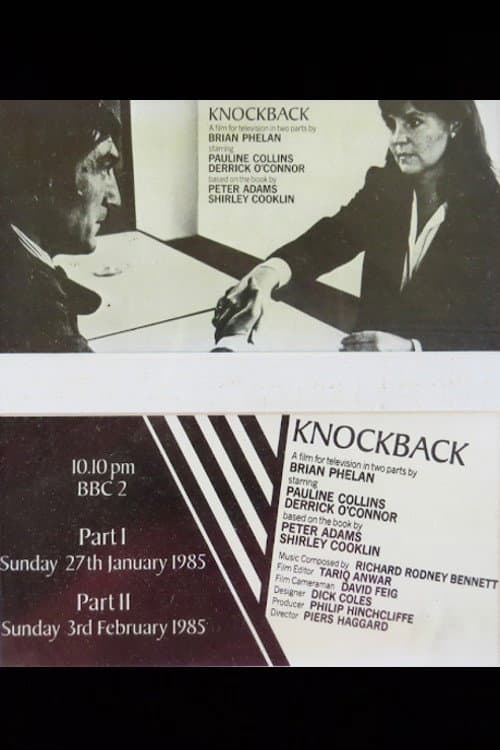
Movie - 1985, 2h 15m • as Dobbs
In 1965, at the age of 25, Alan Ackland is sentenced to life imprisonment for the murder of a business associate. In 1971, Sylvia Barker, lonely and depressed after a failed marriage and with two young children to bring up alone, seeks a new direction in her life and applies to become a voluntary prison visitor. Several years later their paths cross.

Movie - 1969, 2h 15m • as Kimmage
Dominic Behan's play concerning the IRA’s bombing campaign in London in 1939

Movie - 1964, 2h 15m • as Bantam Lyons
One day in the life of assorted Dubliners, in the summer of 1904.

Movie - 1968, 2h 15m • as Bus Conductor
Late at night a gang of young men refuse to pay their bus fares, and assault the conductor. None of the other passengers or the driver intervene. After the incident everybody involved is interviewed in the studio about why they behaved as they did. Scene’s first play, specially commissioned for the series, was repeated late at night for an adult audience in December 1968, and shown again for schools to mark 25 years of Scene in 1993.