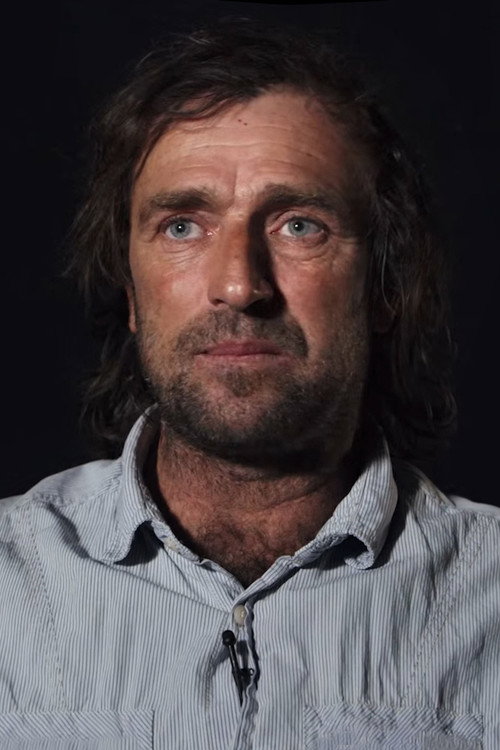
Yannick Graziani
Biography
Yannick Graziani, born on October 24, 1973, in Cagnes-sur-Mer, is a mountaineer and high-mountain guide who has been a member of the Chamonix Guides Company since 2000. Graziani completed numerous climbs in the Mont Blanc massif, notably the *Directe Américaine* on the West Face of the Drus, the *Gamma* route on the South Face of the Écrins, the *MacIntyre*, *No Siesta*, and *Desmaison-Gousseault* routes on the North Face of the Grandes Jorasses, the *Directe du Nez de Zmutt* on the Matterhorn, and the *Frêneysie Pascale* and *Hyper Couloir* ice gullies on the South Face of Mont Blanc. He then set out to explore the Andes, successfully climbing the South Face of Huandoy Sur (6,160 m) in Peru in 1997 with Jérôme Blanc-Gras—a feat recognized with an FFME Crystal award—followed by a solo ascent of Aconcagua via its South Face (6,962 m) in Argentina in 1999. Next came the Himalayas. Graziani belongs to the generation that bypassed the era of massive Himalayan expeditions, instead fully embracing the "alpine style"—accepting the high level of commitment and the significant risk of failure inherent to that approach. He traveled to the Everest region with his friend Christian Trommsdorff in 1997 and 1998, tackling peaks in alpine style. Later, joined by Patrick Wagnon, the trio undertook a series of expeditions, forming the formidable TGW rope team (Trommsdorff-Graziani-Wagnon). For nearly a decade, Yannick Graziani and two friends pioneered new routes and claimed first ascents on 7,000-meter peaks across Nepal, Pakistan, and Tibet, amassing a remarkable and eclectic list of successes throughout the Himalayas—from Makalu (via the southeast ridge and east face) to Chomo Lonzo, Annapurna, Nemjung, Chaukhamba II, and Pumari Chisch. The three climbers championed "alpine style" as the only way to go: rejecting supplemental oxygen, high-altitude porters, and the pre-equipping of the mountain. In the autumn of 2013, Annapurna’s formidable south face was climbed twice: first solo by the phenomenal Swiss mountaineer Ueli Steck, and then, two weeks later, by the French team of Yannick Graziani and Stéphane Benoist. In 2013, they reached the 8,091-meter summit of Annapurna via the south face after an eight-day ascent. Stéphane suffered severe frostbite and developed a lung infection. The descent was a nightmare. Upon reaching 6,700 meters at nightfall, their headlamp batteries died. Yannick decided they would use the glow from their camping stove for light; they had to press on at all costs. He set up rappels and descended with the gas stove tucked inside his jacket. At each stage, he would light the stove and then lower Stéphane. They repeated this process for hours. It took two days and two nights to descend to Camp 1, from where they were evacuated by helicopter. Yannick saved the team, demonstrating that their bond—forged by the rope—could transcend the sum of its parts. The 2014 Piolet d'Or jury awarded them a special mention for this ascent in honor of the camaraderie of the rope team.
Known For & Full Filmography2 Titles

Movie - 2018, 2h 15m • as Self
An expedition film in the form of a multi-voice travel diary, where all emotions pass through the spectators who are immersed for three weeks with these riders and guides in the Karakoram massif in Pakistan.

Movie - 2014, 2h 15m • as Self
For twenty years, the Beghin-Lafaille route on the South Face of Annapurna was considered one of the most difficult and dangerous in the Himalayas. In the autumn of 2013, it was climbed first by Ueli Steck solo, and then by the team of Yannick Graziani and Stéphane Benoist. It is an extraordinary route that profoundly changed the lives of those who tackled it. The film recounts the remarkable convergence of destinies surrounding this climb and explores how such an ascent can transform a life. Drawing inspiration from the experiences of astronauts returning from the moon—who suffered from "absolute achievement" syndrome—the filmmakers sought to understand how the deep-seated drives that compel mountaineers to prepare for and commit to such climbs can shatter at the very moment a lifelong goal appears to have been reached.