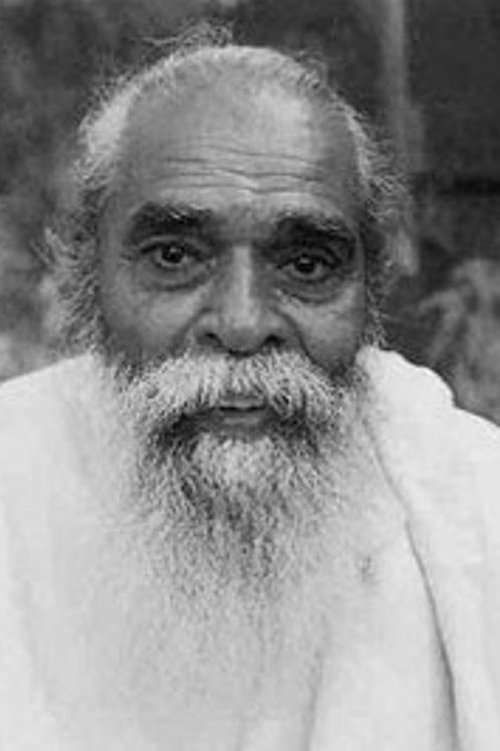
G. V. Iyer
Biography
Ganapathi Venkataramana Iyer (3 September 1917 – 21 December 2003), popularly known as G. V. Iyer, was a well-known Indian film director and actor. He was nicknamed "Kannada Bheeshma", and was the only person who made movies in Sanskrit. His movie Adi Shankaracharya (1983) won four National Film Award, including Best Film, Best Screenplay, Best Cinematography and Best Audiography. His films were well known for their spiritual themes. He was born in 1917 in Nanjanagud in Mysore district of Karnataka state in South India. His most critically acclaimed films Bhagavad Gita (1993), which won the National Film Award for Best Feature Film and was nominated for Best Film at the Bogotá Film Festival. And Swami Vivekananda (1998), Mithun Chakraborty won national award for Best Supporting Actor.
Known For & Full Filmography11 Titles

Movie - 1975, 2h 15m • Main Cast Role
Venkatasubbaiyya's master asks him to compose a musical masterpiece before his death. However, Venkatasubbaiyya's failure to handle fame lands him in trouble.

Movie - 1976, 2h 15m • Main Cast Role
The local god prophesies that Balappa can solve the problem of a lack of rain in the village when a demon possesses the head-man.

Movie - 1961, 2h 15m • Main Cast Role
Kantheredu Nodu is a 1961 Indian Kannada-language film, directed by T. V. Singh Thakur and produced by A. K. Velan. The film stars Rajkumar, Leelavathi, T. N. Balakrishna and Rajasree. The film has musical score by G. K. Venkatesh. The film was remade in Malayalam in 1965 as Kavyamela and the producer of Kantheredu Nodu, Velan, subsequently remade it in Tamil in 1968 as Devi, starring R. Muthuraman and Devika.

Movie - 1956, 2h 15m • Main Cast Role
The film marks the first time singer P. B. Srinivas sung for Rajkumar. Rajkumar and G.K. Venkatesh too turned singers with this movie.

Movie - 1977, 2h 15m • Main Cast Role
Hemavathi, a noble priest's daughter, is married off to a jobless man in the city who abandons her. When she returns to her father's village, a caste-based struggle awaits her.

Movie - 1983, 2h 15m • as Veda Vyasa
The movie follows the life and times of Sankara - the founder of the non-duality (Advaita) school of Indian philosophy.

Movie - 1960, 2h 15m • as Thungarya
Ranadheera Kanteerava is a 1960 Indian Kannada-language historical drama biographical film directed by the editor-turned-director N. C. Rajan and written by G. V. Iyer. It is one of the most popular films of acclaimed Kannada actor Rajkumar, who plays the role of an emperor Kanthirava Narasaraja I of the Wodeyar dynasty, Mysore, who was fondly named as Ranadheera Kantheerava. The film depicts the life of Kanteerava, who is known for his immense physical strength through wrestling. The film was credited to be one of the most authentic historical films made, since it was entirely based on the documents found in the Mysore Palace. The film also stars Udaykumar, Leelavathi, K. S. Ashwath and Sandhya in prominent roles.

Movie - 1955, 2h 15m • as Sarvantaryami
Sodari is a 1955 Indian Kannada-language film directed by T. V. Singh Thakur. The film stars Pandari Bai, Narasimha Raju and Rajkumar. The music for the film was composed by Padmanabha Shasthri. The story of the film is based on the life of Hemavati, the pious wife of King Kailasanatha. She faces numerous hardships along with her children when Kailasanatha loses his kingdom due to a drought. The actress Jayashree plays a negative role of Chanchaladevi, a cunning relative of Hemavati. The movie is based on GV Iyer's stage play Anna Thangi which was based on the popular legend of Nalla Thangaal whose story had earlier been adapted in Malayalam in 1950 as Nalla Thanka and later in Tamil as Nalla Thangal (1955).

Movie - 1954, 2h 15m • as Kailashanath Shastri
A hunter tries to prove his extreme devotion to Lord Shiva by removing both of his eyes.

Movie - 1956, 2h 15m • Main Cast Role
Hari Bhakta is a 1956 Kannada-language film directed by T. V. Singh Thakur. The film stars Rajkumar and Pandari Bai. It had Mynavathi, Narasimharaju, G. V. Iyer, H. R. Shastry playing supporting roles.[1] The movie is based on the life of Pundarika

Movie - 1959, 2h 15m • Main Cast Role
The life of Basava, a philosopher and social reformer from Karnataka who lived in the 12th century A.D.