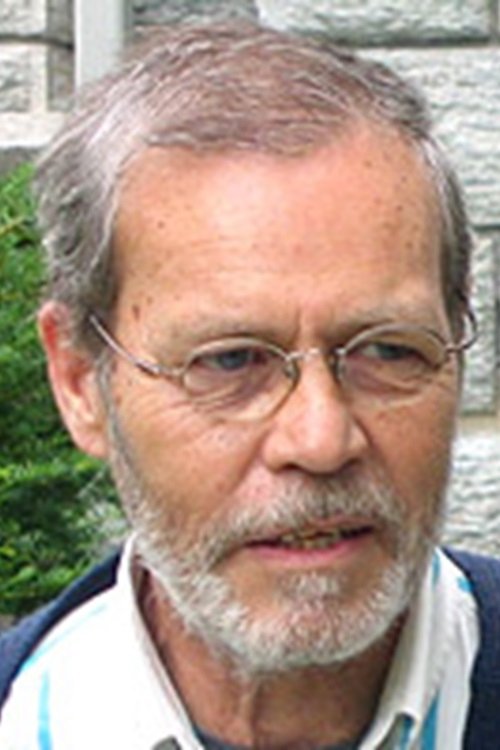
Jacques Leduc
Biography
Jacques Leduc (born November 25, 1941) is a Canadian film director and cinematographer. Leduc began his career in 1961 working as a film critic for the magazine Objectif. The following year, at the age of 21, he was hired as a camera assistant by the NFB. Over the course of the next few years he worked under such filmmakers as Denys Arcand, Gilles Carle, and Don Owen. In 1965 he began working as both Director and Cinematographer; his first film as director was a documentary short entitled Chantal en vrac. Leduc continued his work as Director with his first feature film in 1967 entitled Nomininque, depuis qu'il existe and his first feature documentary film in 1969 entitled Cap d'espoir. The documentary film was "about the muted violence that existed [in Quebec] and the monopoly over news held by Power Corp." and became one of the most famous cases of censorship at the NFB when it was banned by NFB commissioner Hugo McPherson. Leduc continued working on critically acclaimed films throughout the 70s and 80s such as On est loin du soleil (1970), Tendresse ordinaire (1973), and Trois pommes à côté du sommeil (1988). In 1990 he left the NFB and became a freelance filmmaker.[3] In 1992 he directed the film La vie fantôme; the film was named Best Canadian Film at the Montreal World Film Festival and earned a Genie Award for Best Screenplay nomination. Since then he has primarily worked with other Directors as their cinematographer and in 2008 was awarded the Prix Albert-Tessier.
Known For & Full Filmography5 Titles

Movie - 2011, 2h 15m • as self
A two-part in-depth exploration of the evolution of the private film industry, seen through the eyes of more than 50 industry professionals. Part One (1939-1979) : Artists and professionals from the social and commercial film sectors recount the struggle to build a film industry that is privately operated yet publicly funded. Part Two (1980-2010) : Executives, policymakers, and industry professionals trace the origins of the major funding institutions and discuss the unintended consequences of building a cultural industry around performance metrics, revenue generation, and private profit.

Movie - 2001, 2h 15m • as Jacques Leduc
A filmmaker, fascinated by the power of the camera and obsessed with the theories of Russian film pioneer Dziga Vertov, decides to get a camera eye to replace the real eye he lost as a child. The visionary quest begins on the operating table, where a surgeon grafts a prototype ocular implant into his eye socket. Seeking a microscopic camera that could be incorporated into his artificial eye so he could secretly film whatever he sees, the filmmaker explores the futuristic technology that could make this possible, while revisiting chapters of his own past.

Movie - 1973, 2h 15m • as A Militant
The unexpected return of his ex-wife and the assembly of a group of protesters both threaten to wreck a corrupt contractor's inauguration party for his new superhighway.

Movie - 1985, 2h 15m • as Self
An anthology of sequences from the best films that the National Film Board of Canada produced since its beginnings. Divided by themes and presented by a trio of actors-signers (including Carle's wife Chloé Sainte-Marie) who sings the same song in between the movie excerpts. This movie celebrated the anniversary of the National Film Board in 1985.

Movie - 1972, 2h 15m • Main Cast Role
An outstanding performance featuring brilliant storytelling, high stakes drama, and unforgettable character arcs.