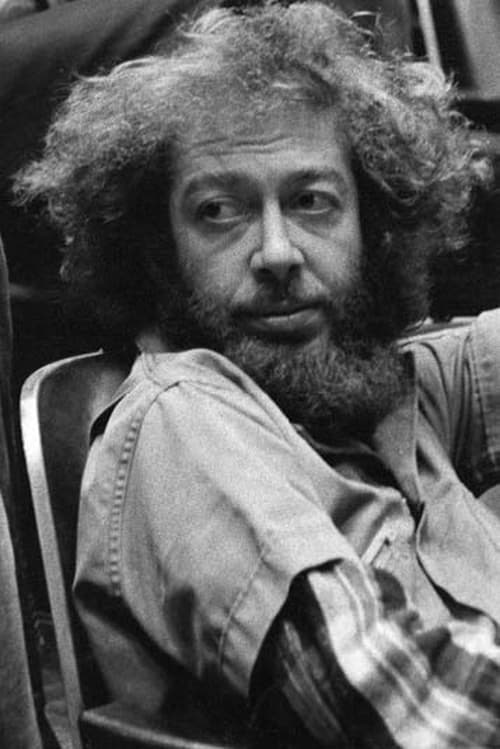
Hollis Frampton
Biography
Hollis Frampton is known for the broad and restless intelligence he brought to the films he made, beginning in the early '60s, until his death in 1984. In addition to being an important experimental filmmaker, he was also an accomplished photographer and writer, and in the 1970s made significant contributions to the emerging field of computer science. He is considered one of the pioneers of what has come to be termed structuralism, an influential style of experimental filmmaking that uses the basic elements of cinematic language to create works that investigate film form at the expense of traditional narrative content. Along with Michael Snow and Stan Brakhage, he is one of the major figures to emerge from the New York avant-garde film community of the 1960s.
Known For & Full Filmography9 Titles

Movie - 2000, 2h 15m • as Self (archive footage)
A compilation of over 30 years of private home movie footage shot by Lithuanian-American avant-garde director Jonas Mekas, assembled by Mekas "purely by chance", without concern for chronological order.

Movie - 1979, 2h 15m • as Max A. Zorn
Grand Opera marks a stock-taking of Benning's work and his life, presenting a personal and artistic autobiography woven together with a series of events dealing with the historical development of the number pi, Benning's travels, and homages to Michael Snow, Hollis Frampton, George Landow (Owen Land), and Yvonne Rainer.

Movie - 1967, 2h 15m • Main Cast Role
In a Lower Manhattan industrial loft, a camera very slowly zooms into a photograph on a wall while various people occasionally enter and exit.

Movie - 1986, 2h 15m • as Self (archive footage)
A film collage tracing the story of the lives, loves, and deaths within the artistic community surrounding Jonas Mekas.

Movie - 1973, 2h 15m • Main Cast Role
During the 1970s I shot, helped to make, or commissioned about ten document films, mainly about film-makers. This film is one of them. It was made with Dan Ochiva, who acted as cameraman on about half of the footage. I shot the rest, and then edited the film. It is a record of a conference held at the State University of New York at Buffalo on March 22-25, 1973. Among the participants filmed were Gerald O'Grady (who organized the conference), Will Hindle, Stan Brakhage, Jonas Mekas, Robert Creeley, Bruce Baillie, Scott Bartlett, Hollis Frampton, Ken Jacobs, Ed Pincus, Stan Vanderbeek, Ed Emshwiller, Sally Dixon, James Cox. This footage will eventually become part of my film PEOPLE, PLACES, THE 1970S. –R. H.

Movie - 2006, 2h 15m • Main Cast Role
A recording of a meeting in the studio where Jeffrey Schier and Woody show colleagues and teachers a new tool. Between 1976 and 1980, Woody and Schier designed a prototype device, the Vasulka Imaging System, or Digital Image Articulator. It was one of the first digital audiovisual tools to generate image algorithms and convert them to an analog signal. In the 1970s and 1980s, the Department of Media Study at the State University of New York at Buffalo became one of these places of, teaching and mediating, in the area of Media Art, developing into what was perhaps to the most influential school for media in the twentieth century. Teaching there under the leadership of the founder Gerald O’Grady were the (meanwhile canonized) structuralist, avantgarde filmmakers Hollis Frampton, Tony Conrad, and Paul Sharits, documentary filmmaker James Blue, video artists Steina and Woody Vasulka, and Peter Weibel.

Movie - 1985, 2h 15m • Main Cast Role
Home movies shot on Super 8mm by W+B Hein over 10 years.

Movie - 1967, 2h 15m • Main Cast Role
Joyce Wieland: “Hollis and I came back to Toronto on holiday in the summer of '67. We were staying at a friend's house. We worked our way through the city and eventually made it to the island. We followed each other around. We enjoyed ourselves. We said we were going to make a film about each other - and we did”. A & B in Ontario was completed eighteen years after the original material was shot. After Frampton's death, the film was assembled by Wieland into a cinematic dialogue in which the collaborators shoot each other with cameras.

Movie - 1975, 2h 15m • Main Cast Role
Begins with landscape/sunset thru mist, ends with window sill.