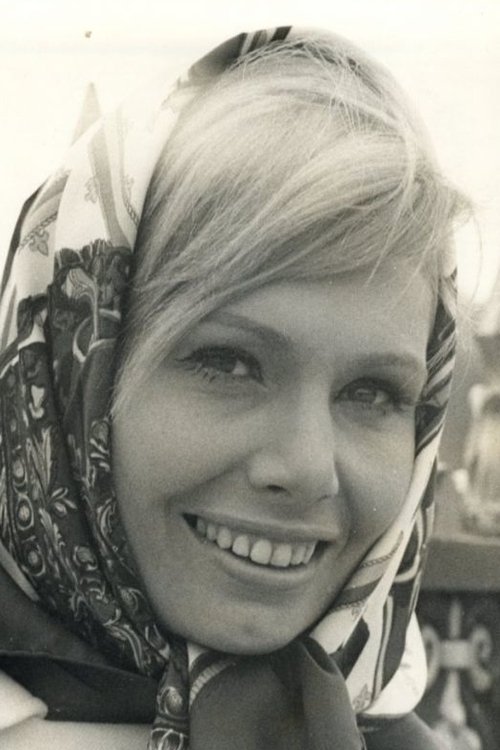
Ruth Gassmann
Biography
Ruth Gassmann is a German actress and vocalist.
Known For & Full Filmography12 Titles

Drama Series - 1948, 16 episodes • as Self
The Bambi, often called the Bambi Award and stylised as BAMBI, is a German award presented annually by Hubert Burda Media to recognize excellence in international media and television to personalities in the media, arts, culture, sports, and other fields "with vision and creativity who affected and inspired the German public that year", both domestic and foreign. First held in 1948, it is the oldest media award in Germany. The trophy is named after Felix Salten's book Bambi, A Life in the Woods and its statuettes are in the shape of the novel's titular fawn character. They were originally made of porcelain until 1958, when the organizers switched to using gold, with the casting done by the art casting workshop of Ernst Strassacker in Süßen.

Drama Series - 1963, 16 episodes • as Agnes
Das Kriminalmuseum was a German television series. It ran from 1963 to 1970 on ZDF and was one of its first programs. Each episode began with a tracking shot through an unspecified crime museum, stopping at one of the displays, whose story was then told. Each episode was between 60 and 75 minutes long and featured different actors as the criminal commissioner. The best known was Erik Ode, who in 1969 moved to Der Kommissar, appearing in 97 episodes. The theme music of the series was written by German composer Martin Böttcher, who also composed the complete scores for five episodes.
Drama Series - 1963, 16 episodes • as Ruth
Das Kriminalmuseum was a German television series. It ran from 1963 to 1970 on ZDF and was one of its first programs. Each episode began with a tracking shot through an unspecified crime museum, stopping at one of the displays, whose story was then told. Each episode was between 60 and 75 minutes long and featured different actors as the criminal commissioner. The best known was Erik Ode, who in 1969 moved to Der Kommissar, appearing in 97 episodes. The theme music of the series was written by German composer Martin Böttcher, who also composed the complete scores for five episodes.

Movie - 1969, 2h 15m • as Helga
An outstanding performance featuring brilliant storytelling, high stakes drama, and unforgettable character arcs.

Drama Series - 1963, 16 episodes • as Mannequin Margot
An outstanding performance featuring brilliant storytelling, high stakes drama, and unforgettable character arcs.

Drama Series - 1963, 16 episodes • Main Cast Role
An outstanding performance featuring brilliant storytelling, high stakes drama, and unforgettable character arcs.

Movie - 1967, 2h 15m • as Helga
Helga is a documentary film that deals with the physical aspects of human anatomy and reproduction. From the earliest stages of pregnancy, to birth, the camera follows Helga through all, until she has her baby. This semi-documentary-styled film relies heavily on medical and educational information. The actual birth is filmed in remarkable close-up sequences.

Movie - 1972, 2h 15m • as Angel Smith
Robinson, a down-on-his-luck pharmacist who’s pestered by his nagging wife and overbearing mother-in-law, dreams of seclusion on a remote island with the girl of his fantasies. Finally fed up, he decides to leave and make his dream a reality. But beware! there are cannibals.

Movie - 1988, 2h 15m • as Saskias Oma
When a young family, father, mother and their daughter, is on a trip in the mountains, they lose orientation and have to stay there for the night. The daughter finds a dead young girl who does exactly look like herself. When they check for mountain rescue service they suddenly find themselves deeply involved in an local myth about a prophecy which seems to be fulfilling now. The mountains are bearing an old curse.

Movie - 1979, 2h 15m • as Maid Margarete
During the time of the Peasants' Wars, the free knight Götz von Berlichingen gets into all kinds of private and political entanglements when he defends the Bishop of Bamberg. He is declared an enemy of the empire and ostracized as a robber. Insurgent peasants, of whom he becomes the leader, also betray him by attacking a town against the condition that no violence be used.

Movie - 1964, 2h 15m • as Dr. Esters
A group of physicians sets out on an international expedition to study the causes and spread of sexually transmitted diseases. Through encounters across Europe and Africa, the film examines how modern lifestyles, social change, and human behavior intersect with public health. Presented as a semi-documentary drama, it delivers a stark warning about a global medical and moral challenge.

Movie - 1968, 2h 15m • as Helga
Continuing the story of Helga, another dramatised documentary on sex education discussing such points as the mother-child relationship, abortion, contraception, the sex organs, coitus etc.